
March 24, 2011
Grow: Creating an Exhibition at ArtStarts

Installation of our latest art exhibition "Grow" has just been completed and our gallery walls are once more hung with beautiful, moving and inspiring art work created by some of BC's talented young people. We spoke to the show's curator, Katie Varney, to get some deeper insight into the show and how it all came together.
Climate change is on everyone’s minds these days, so it’s no surprise that schools are addressing environmental issues in their classrooms. I know that many children feel overwhelmed, scared and helpless about the future of our planet, but it is important that we, as adults, help young people navigate the issues and to think about the ways that they can contribute to positive change. I believe that providing children with opportunities for creative ways learning about the world around them will enable them to grow into the community leaders, critical thinkers, and environmental stewards of our future.
 Students from St. Joseph's Elementary in Chemainus connecting experience out in nature with art-making in the classroom.
The idea for ‘Grow’ was born out of an ambition to showcase children’s artwork that connects to the natural world. In the creation of many of these projects, students spent time outdoors – undertaking scientific fieldwork, creating links to nature and observing interconnections in the living world. The hope is that the exhibition helps to instill a sense of hope and optimism for the future by focusing on opportunities for sustainable growth and positive change.
Where did the art work come from?
All of the work on exhibition was created through Artists in Education 2 (AIE2) program, which helps to bring artists into schools around BC for artist residencies and workshops. ArtStarts programs engage children in over 200 communities across the province and the AIE2 program funds over 60 artist residencies each year.
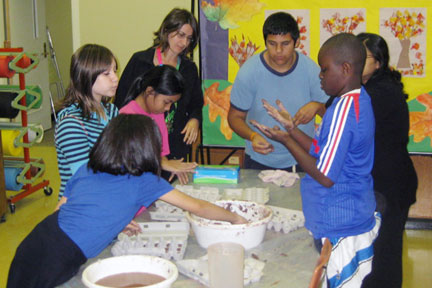 Students from Mount Pleasant Elementary working on their project "Pathway to Sustainability".
The artwork in ‘Grow’ was created in schools located around the Lower Mainland, Vancouver Island and the Gulf Islands. We currently have two exhibitions of children’s art each year and the work we show come from both rural and urban communities around the province.
How long did it take to create this exhibition?
I am always looking for interesting projects to showcase in ArtStarts’ gallery, but I would say that the whole process of producing an exhibition takes about 3 months, from start to finish. The work load gets much heavier when we are changing over exhibitions, which generally takes between 2-3 weeks.
Once we decide on a theme for an exhibition, I begin to source out youth-created projects that link to the topic. Then we begin to contact the schools (or in some instances the artists) involved in the project to see if they have photos of the project, either in process of being created or completed. Once we have decided on an artwork, we then arrange the shipment of the artwork from the school to our gallery in downtown Vancouver. Then, the real fun begins.
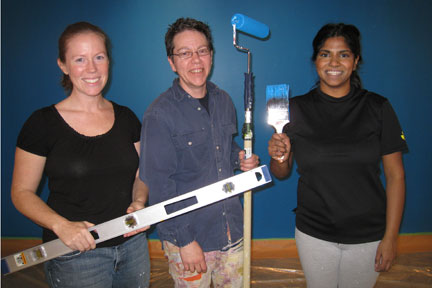 Installation team Katie, Francois and Rekha.
Volunteers, staff and I roll up our sleeves and get dirty. First, we pack up and ship the artwork from the previous exhibition back to schools. Then we prep, grout, sand and painting the walls. We try to design the physical layout prior to installing, but there is definitely a bit of creative development that goes on throughout the installation process, as we address technical, special and lighting needs. The vinyl signage and didactical support materials are installed at the very end.
What is the biggest challenge?
The biggest challenge that we face when putting together an exhibition is that we do not ever really know the details of the work (size, quantity, etc.) for the exhibition before it arrives. I’ve worked in other galleries, where shows are planned one year in advance and we know the details and exact dimensions beforehand. With ArtStarts' student exhibitions, we are often surprised what we receive for exhibition. Often, what we think will be a centerpiece of a show, might be overshadowed by another work or be too small – so we need to adjust the layout and design accordingly.
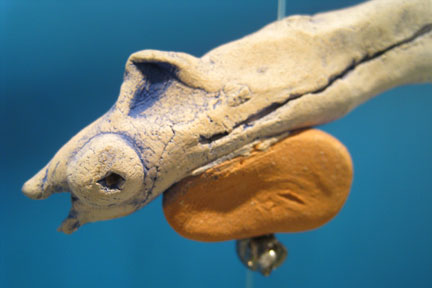 Salmon fry. Detail of installation by students from St. Joseph's Elementary in Chemainus.
The challenge is to remain flexible, let go of expectations and simply trust the creative process. While it’s the biggest challenge, I also get one of the greatest senses of satisfaction through this practice.
What is the greatest reward?
The greatest reward is seeing the faces of the children when they see their own work professionally installed on the gallery walls. Nothing beats it. You can see the pride that they have in knowing that their voices are being acknowledged and celebrated. Young visitors also have the opportunity to personally connect to the work of their peers. We recently had an exhibition of art created by First Nations youth and during a tour, one little boy stood up in front of his class and blissfully declared, “I’m Aboriginal, did you know?” He was totally beaming with pride.
 One of the watercolour paintings by students from Hume Park Elementary in New Westminster.
Thanks to Katie and her team as well as all the students, artists and teachers who made this exhibition possible.
Visit the Gallery
Visit the ArtStarts gallery to experience Grow for yourself. To enjoy some of our past exhibitions, visit our online exhibition archive.
Gallery Hours: Tuesday - Friday, 9am - 5pm
Address: 808 Richards St. at Robson St. in Vancouver [map]
Telephone: 604.878.7144
This exhibition is sponsored by Boeing. The projects on exhibition were created through the Artists in Education 2 program, supported by BC Arts Council, Vancouver Foundation, Columbia Basin Trust.
Past Stories
 Loading...
Search by category
Accessibility | AIC Projects | Arts Integration in Action | ArtStarts Artists | ArtStarts Team | Community Events and Engagement | Exhibitions | Grants | Guest Blog | Infusion Pro-D | Knowledge Philanthropist | Meet a Community Art Star | Showcase | Supporters | The Next 20
808 Richards Street, Vancouver, BC, V6B 3A7, Canada